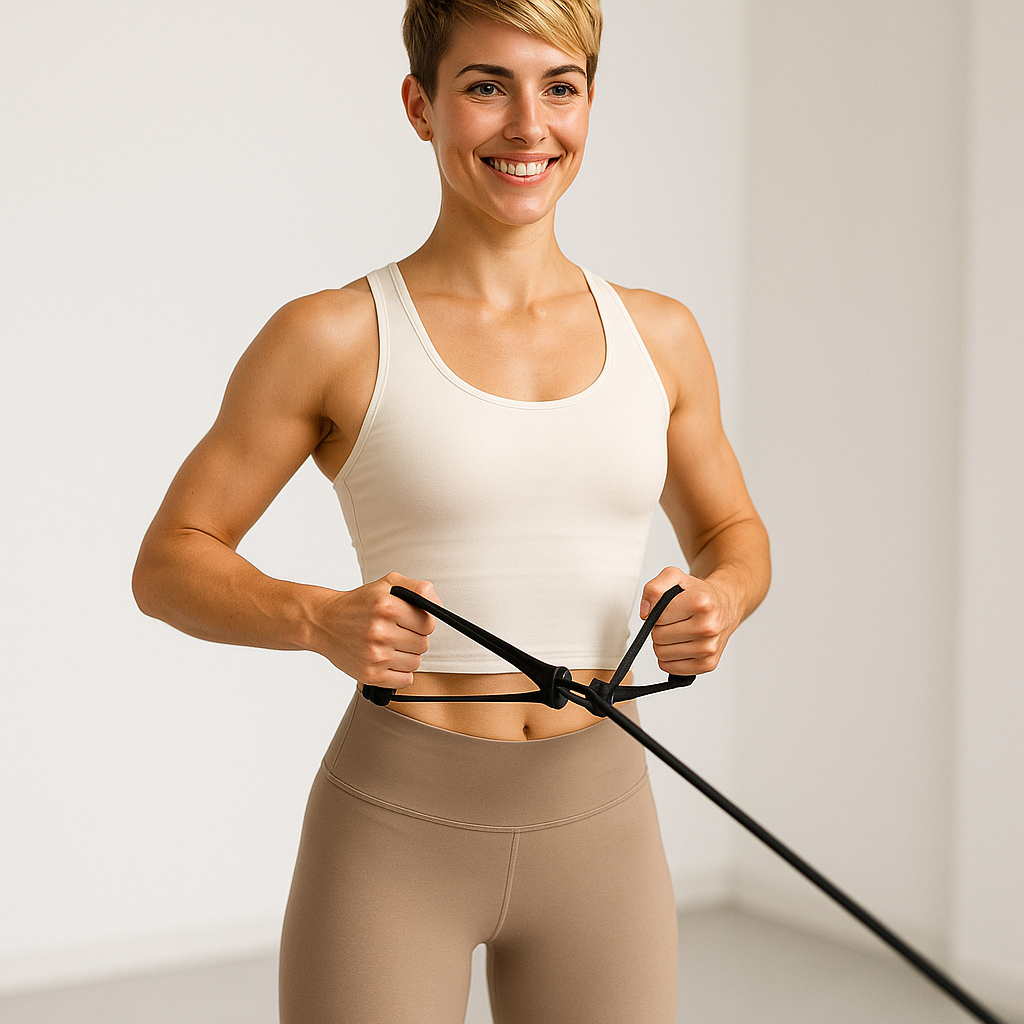
Resisted Pelvic Dissociation in Hip Rotation 90/90 with Elastic Band
Resisted pelvic dissociation in 90/90 hip rotation, 3 sets, 8 repetitions per side, elastic resistance

Listen to the instructions
How to do the exercise
Sets: 3
Repetitions: 8 on each side
Equipment: resistance elastic band
Description: Sit in a 90/90 position with hips and knees at right angles, secure an elastic band around the thorax. Keep the pelvis stable and perform a slow, controlled rotation of the thorax to one side, following the movement with your gaze, without moving the pelvis. Return to the neutral position and repeat on the other side.
Tips: Ensure not to arch the lower back during rotation and keep the pelvis immobile to properly isolate thoracic rotation. Control the resistance of the elastic band to avoid compensation.
Progression: Increase the resistance of the elastic band or the number of repetitions when the movement becomes easy.
At a glance
- Goal
- Strengthening
- Level
- Intermediate
- Equipment
- bande élastique de résistance
- Starting position
- Assis en position 90/90 (hanche et genou à 90 degrés)
- Clinical goal
- Renforcer la mobilité et la stabilité thoracique en dissociant le mouvement du bassin
- Also known as
- rotation thoracique 90/90 avec élastique, dissociation ceintures rotation thorax, rotation résistée en position 90/90