Rotator cuff tendinopathy: exercises
Rotator cuff tendinopathy (often called shoulder tendinitis) causes pain when raising the arm and at night.
Treatment is mainly based on progressive strengthening of the rotator cuff muscles and the shoulder blade stabilisers.
Stages of rehab
- Settle the irritation: isometrics and pain-free mobility.
- Progressively strengthen the external and internal rotators with a resistance band.
- Work with the arm overhead and return to everyday or sports movements.
Recommended exercises
 Anterior Serratus Strengthening with Elastic Band
 Archery Exercise with Scapular Retraction
 Controlled Shoulder Press with Scapular Stabilization
 Cross Elastic Band Row for Shoulders
 External rotation isometric shoulder exercise in side-lying position
 External shoulder rotation in side-lying position
 External shoulder rotation with elbow bent at 90° (isometric)
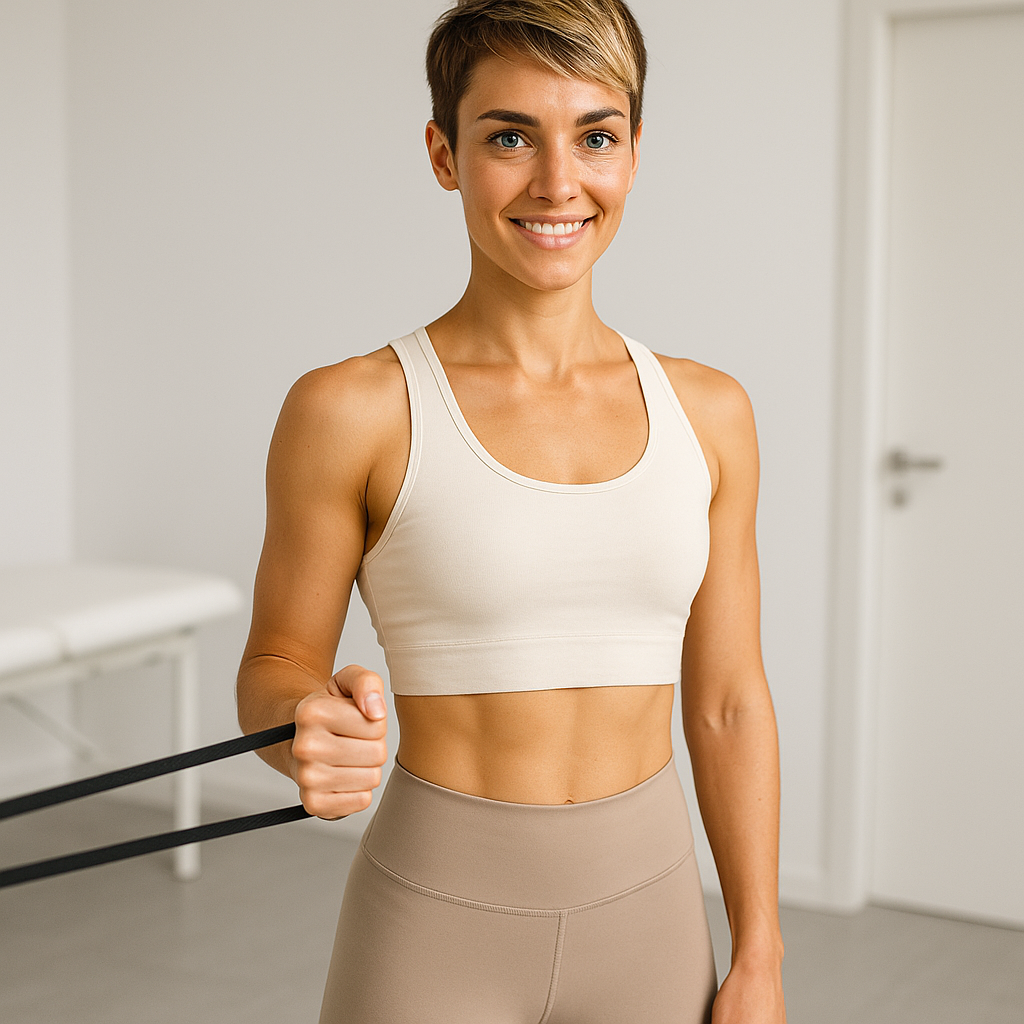 External Shoulder Rotation with Resistance Band, Elbow Bent at 90°
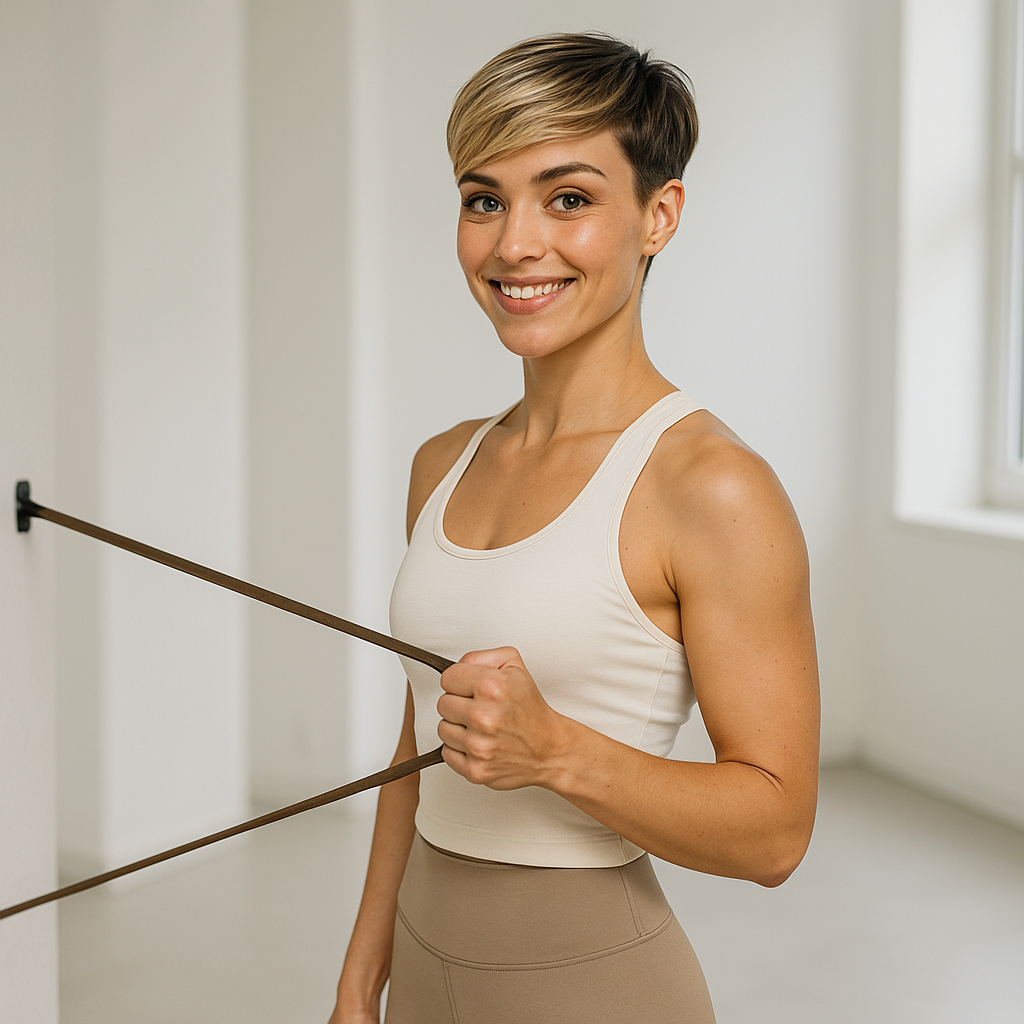 External shoulder rotations with elastic band
 Forward Weight Projection with Dumbbell
 Front and Lateral Arm Raises with Light Dumbbells
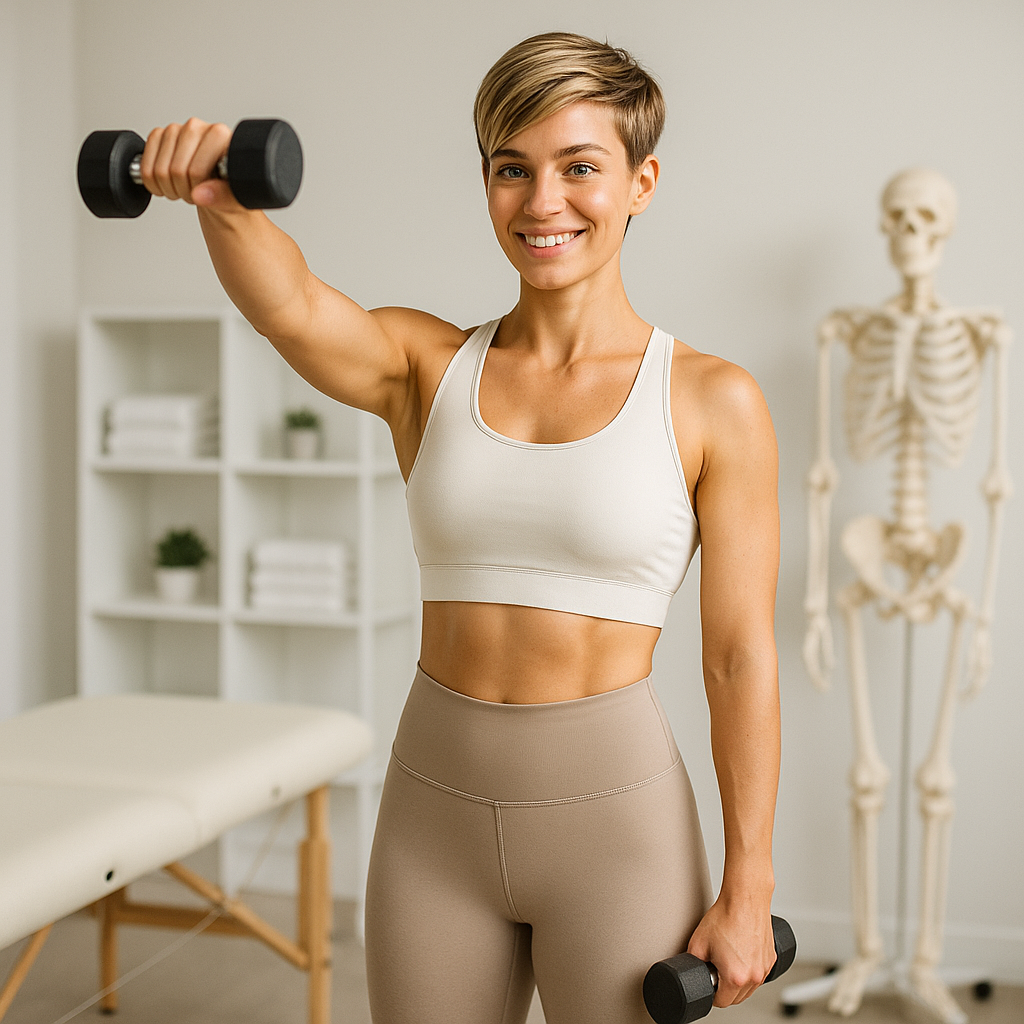 Front Elevation with Dumbbell
Practical tips
- Adjust the load: pain should not be worse the next day.
- Strengthening takes several weeks of consistent work.
- Seek advice if you suddenly lose strength after a fall.
Are you a physiotherapist?
Add this exercise to a personalised program in Physia: the AI builds the program in 30 seconds from the condition, then you send it to your patient by link, QR code or email.
Patient? Ask your physio to send your program to the free Physia Move app. Open Physia Move
Frequently asked questions
What exercises help shoulder tendinitis?
External and internal rotations with a resistance band, shoulder blade exercises and progressive arm raises form the core of the program.
Do I need to stop sport?
Adapt rather than stop: your physio helps you manage your activities during rehab.
This information is educational and does not replace advice from a healthcare professional. Ask your physiotherapist or doctor before starting, especially if you have pain, a recent injury or have had surgery.